Jonas Taylor
The TrenchJonas Taylor’s life is shaped by a collision between professional ambition and the fear he could not master: after a disastrous encounter with a Megalodon in the Mariana Trench, he remakes himself as a scientist, wins public recognition, and then finds that neither achievement nor celebrity has put the past to rest. His later pursuit of the escaped shark turns that history into a present danger, but the decisive change in his story comes when he understands that his fixation has cost him more than a career or reputation. The need to face the creature becomes bound up with the need to face his own guilt and return to Terry Taylor.
Identity and Background
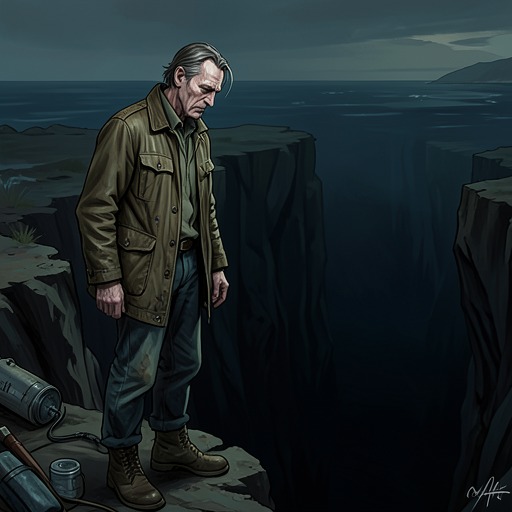
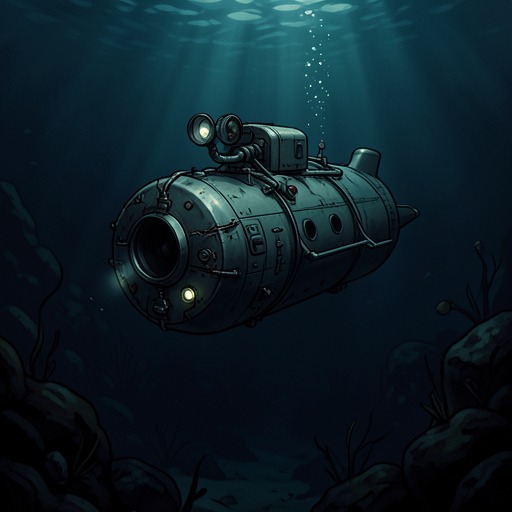
Eleven years before the main events, Taylor piloted the Navy’s three-person Seacliff on a series of top-secret dives nearly seven miles down in the Mariana Trench. During the last dive, he saw a large, luminous shark rise from the darkness. Panic overtook him; he abandoned protocol and sent the submersible rapidly toward the surface. The ascent damaged its pressurization system, and both scientists aboard died. Taylor survived, but his career as an argonaut was over. The event became the source of a lasting conflict: he had escaped, while the people with him had not.
In the years that followed, he returned to school and earned advanced degrees in paleobiology. His research addressed the disappearance of the Megalodon species, and he developed the theory that prehistoric Great white sharks had migrated to the warmer depths of the Mariana Trench to escape the colder surface conditions of the Last Ice Age. Although he grounded the theory in scientific research and published it, colleagues rejected it as fantasy and institutions banned his papers. His work therefore served two purposes: it was an attempt to make sense of the animal he had encountered, and a defense of the decision that had ended the Seacliff dive.
Return to the Trench and Public Rise
Four years after the original encounter, Masao Tanaka offered Taylor a way back to the Mariana Trench. Tanaka, an old friend and mentor, needed help recovering a malfunctioning seismic-detection instrument from the UNIS array. The project was connected to his artificial whale habitat off Monterey, California, rather than to Taylor’s theories about Megalodon. Taylor initially refused because he could not face returning to the trench. With his first marriage failing and his career in disarray, however, the prospect of redemption drew him back.
Tanaka’s daughter, Terry Taylor, was prepared to take the mission herself if Jonas would not accompany her brother. Taylor returned in a one-man submersible. The expedition brought him into contact with Megalodons again: Tanaka’s son died, and a huge pregnant female rose from the depths. Taylor ultimately killed the animal he had hoped to save. The outcome reversed his standing in the scientific world. Once ridiculed for his claims, he became an international celebrity, celebrated as the man who had killed a Megalodon. The captured female’s pup became an attraction at the Tanaka lagoon, while Taylor married Terry and became a partner in Tanaka’s institute. A year later, the lagoon’s live exhibit opened in Monterey. Public vindication, marriage, and professional success followed the return to the trench, but those accomplishments did not resolve the fear and guilt attached to his earlier escape.
Nightmares, Guilt, and the Hunt
Taylor’s later nightmares make the trench a recurring psychological presence rather than a finished episode in his past. One nightmare returns him to a descent in a LEXAN pod: he struggles to breathe, descends into black water, and sees a second pod containing a woman whose face he cannot clearly make out. In another deep-sea vision, he waits in darkness for the animal he imagines as the Angel of Death. These scenes give the fear a repeated form, while his waking life supplies its cause. He tells Celeste Singer that the nightmares began during the trial, where he repeatedly faced the surviving relatives of people who had died in the effort to capture a shark. His account links private distress to public judgment and to the deaths that his decisions helped bring about.
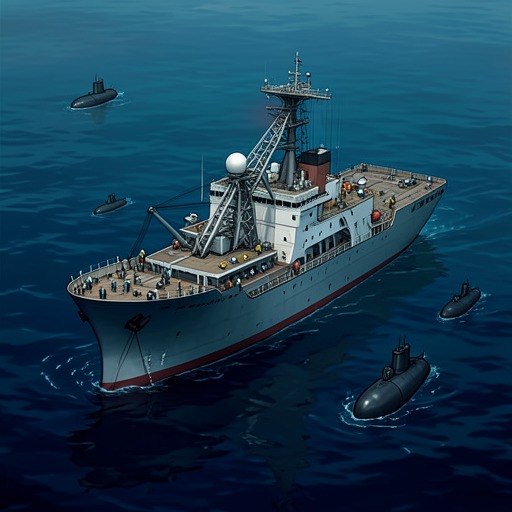
On the William Beebe, the ocean remains both a source of attraction and something he fears. Watching the coast pass from the bow, Taylor recognizes the contradiction between his enjoyment of the sea and his dread of it. Mac Mackreides presses him to see that the pursuit has become consuming: drawing on his own experience of guilt and recurring dreams, Mac compares Taylor’s fixation to a war against an animal that is only trying to survive. He warns that Taylor blames the Megalodon for the losses of the past eleven years and may not stop until he kills it. Taylor’s response is defensive, but the warning names the central danger in his mission: the animal is not responsible for the meaning he has attached to it.
The practical hunt begins with a concrete object: Mac produces a small, dartlike Megalodon tracking transmitter fitted with a barbed harpoon. Taylor calls the escaped animal a loose end and asks for the device. After learning that the Megalodon has escaped, he proposes obtaining a weapon capable of stopping it, recovering from his injuries, and tracking Angel down to kill her. His plan is purposeful, but its language and urgency show how readily responsibility for protecting others merges with the old desire for a final reckoning.
Recognition and Change
Taylor’s turning point is not a sudden loss of fear but a change in how he understands his own history. Looking back across the eleven years since the Seacliff, he recognizes that guilt drove him into paleobiology and that his need to prove himself helped destroy both his marriages. He also recognizes that blind hatred of the Megalodon has brought him close to death. This reckoning gives new weight to the idea of a second chance: survival is no longer merely proof that he was right or an invitation to complete the hunt. It creates the possibility of acting differently.
That change alters his priorities when he learns the Megalodon is heading for the Mariana Trench. Although the captain’s orders direct the ship back to the Bering Sea to recapture the animal, Taylor insists on changing course for the trench. The decision follows his understanding of the creature’s destination, but it also returns him to the place where his defining trauma began. The wider plot connects that history to the conspiracy involving Benedict Singer: the two scientists who died aboard the Seacliff were fusion physicists, and one had been a former colleague of Singer. A coded transmission from the Goliath to Celeste Singer had also mentioned Taylor. His past is thus not only a private wound; it has become relevant to the conflict surrounding the fusion project.
Relationships and Ending
Taylor’s marriage to Terry is both a source of hope and one of the relationships damaged by his preoccupation with the creatures. At the point when he realizes that his fixation has destroyed both marriages, his pursuit can no longer be treated as a separate professional problem. The personal cost is made immediate when Taylor and Mac review footage that appears to show Terry’s death. Taylor recognizes that the tape has been edited and concludes that she is alive. He then commits himself to a rescue, and Mac prepares the Abyss Glider-2 for a dive.
Taylor inspects the one-man submersible before its descent. Its two-hull design encloses a clear LEXAN escape pod that can be jettisoned in an emergency, making the craft a practical instrument for entering the danger he once fled. At Benthos, Taylor notices a console torn from a UNIS robot and pieces together why Celeste allowed him into the hangar: she intended to trigger a mechanism and had locked Terry inside. He finds Terry and performs mouth-to-mouth resuscitation until she regains consciousness. Their reunion is tearful and physical; Terry embraces him, and the two tell each other they love one another. The ending does not erase the deaths, guilt, or damage that preceded it. Instead, it gives Taylor’s second chance a human measure: alongside the continuing danger of the Megalodon, he has recovered the possibility of choosing Terry and their shared life over an all-consuming pursuit.